
Note: This case study contains anonymized examples of product experiences and design system assets. Screens, data, and proprietary details have been modified to protect confidentiality.
Creating Badger Meter’s first accessible unified design system
Badger Meter | Lead UX Designer | 2020 - 2021
Design Systems · Accessibility · Documentation · Component Libraries · UX Research · Developer Collaboration
Tools used: Figma, DevMode, HTML/CSS, ADA/WCAG
The problem: Beacon and EyeOnWater, Badger Meter's water consumption and notification platforms, relied on inconsistent patterns, duplicated components, and limited accessibility standards across web and mobile experiences. The result was a fragmented user experience and inefficient design and development workflows.
The solution: Created Badger Meter's first accessible design system, establishing a single source of truth for components, accessibility standards, and product development.
Impact

Users = Designers, Engineers & End Users
End users
Utilities, municipalities, and customers relied on Beacon and EyeOnWater to monitor water consumption, track usage trends, and receive important notifications.
Internal users
Designers and engineers needed a shared foundation for creating consistent, accessible experiences across multiple web and mobile products.
The Problem = Inconsistent Product Experiences
Products were built independently over time, resulting in fragmented experiences and duplicated design decisions.
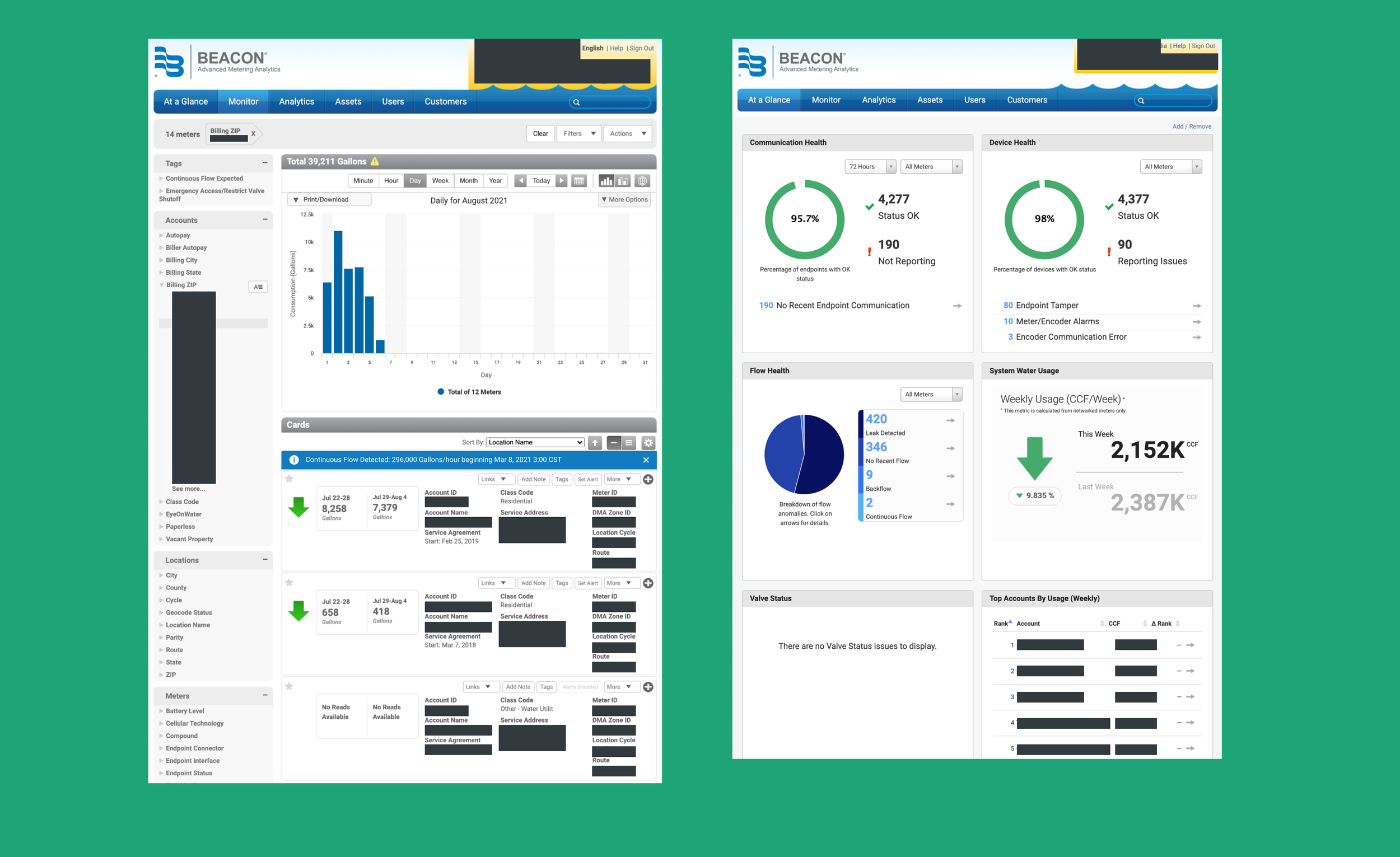
Beacon platform & EyeOnWater metrics (Audited pre-unified design system)
Key Challenges
Inconsistent patterns created fragmented user experiences
Duplicate components increased design and development effort
Accessibility standards varied between teams and products
Documentation gaps slowed implementation and onboarding
No centralized system existed to align design and engineering
Core insight
Teams didn't need more components.
They needed a shared foundation that standardized accessibility, accelerated development, and created consistency across products.
Establishing the foundation
Establishing shared foundations
Defined the foundational system that aligned design and engineering around a shared language.
Defined
Typography
Color system
Spacing scale
Iconography
Accessibility standards
Usage guidelines
✅ Outcome: Established a scalable foundation for consistent product development.

Component library
Scaling through components
Using the foundations, I built a reusable component library designed for both designers and engineers.
✅ Outcome: Reduced duplicated work and accelerated product development.
Documentation
Shared Figma Library
Usage guidelines
Accessibility requirements
Engineering specifications
Built 20+ reusable components and patterns including:
Navigation
Forms
Inputs
Buttons
Tables
Modals
Alerts
Metrics

Accessibility by default
Accessibility was integrated into every state of the design system.

Accessibility guidelines & WCAG contrast checker testing
Standards Included
WCAG compliance
Color contrast requirements
Screen reader support
Internationalization guidance
Accessibility annotations for engineering
✅ Outcome: Accessibility became a standardized part of the design and development process.
Adoption & Governance
Driving adoption: Creating the system was only part of the challenge. Success depended on organization-wide adoption.
Actions Taken
Led design system workshops
Conducted training sessions
Held weekly office hours
Gathered feedback from teams
Iterated documentation and components
✅ Outcome: Achieved 100% adoption across design and engineering teams.
Business Goals Achieved
100% company-wide adoption across design and engineering teams.
Established a single source of truth for components, patterns, and documentation.
Standardized accessibility requirements across products and workflows.
Reduced duplicated design and development effort through reusable foundations.
Created a scalable framework supporting future product growth.
What I learned
Accessibility scales best when built from the start
Retrofitting accessibility across products is significantly more expensive than designing for it upfront.
Adoption requires more than components
Workshops, documentation, and office hours were just as important as the design work itself.
Design systems are products
Long-term success depends on governance, iteration, and stakeholder buy-in.